BUY NOW, With Stripe 
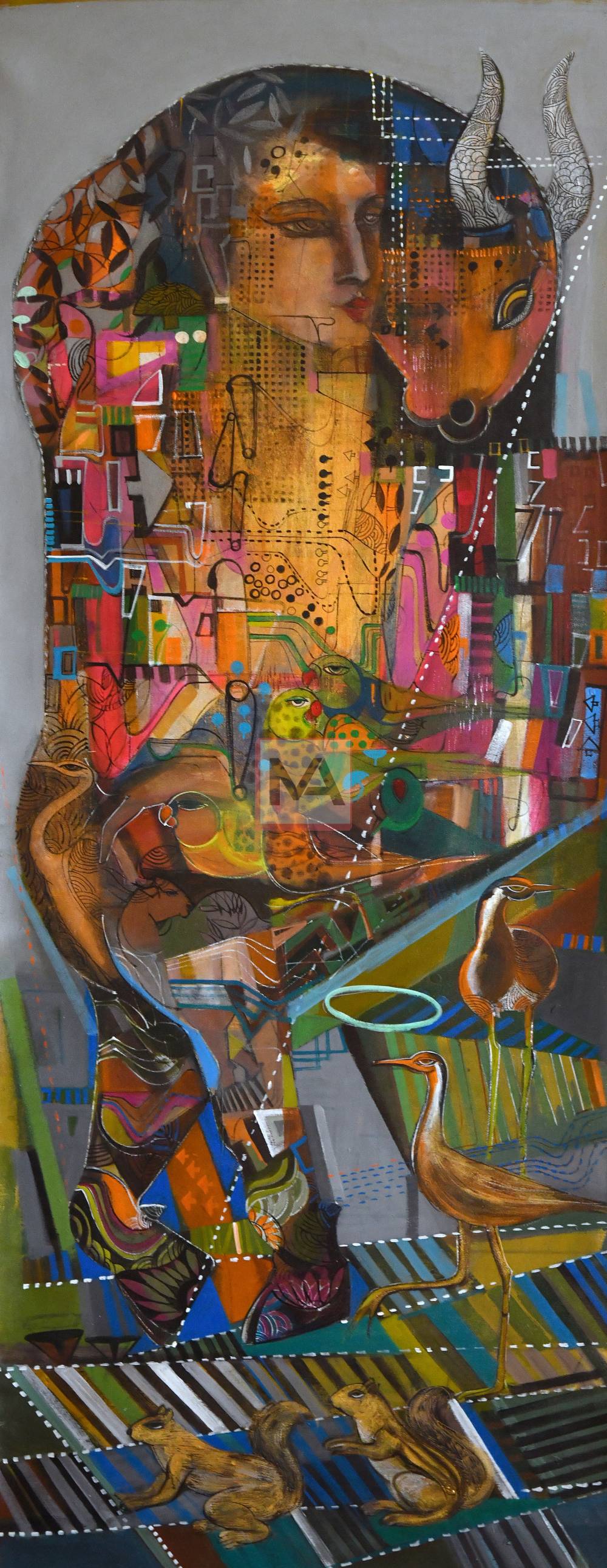
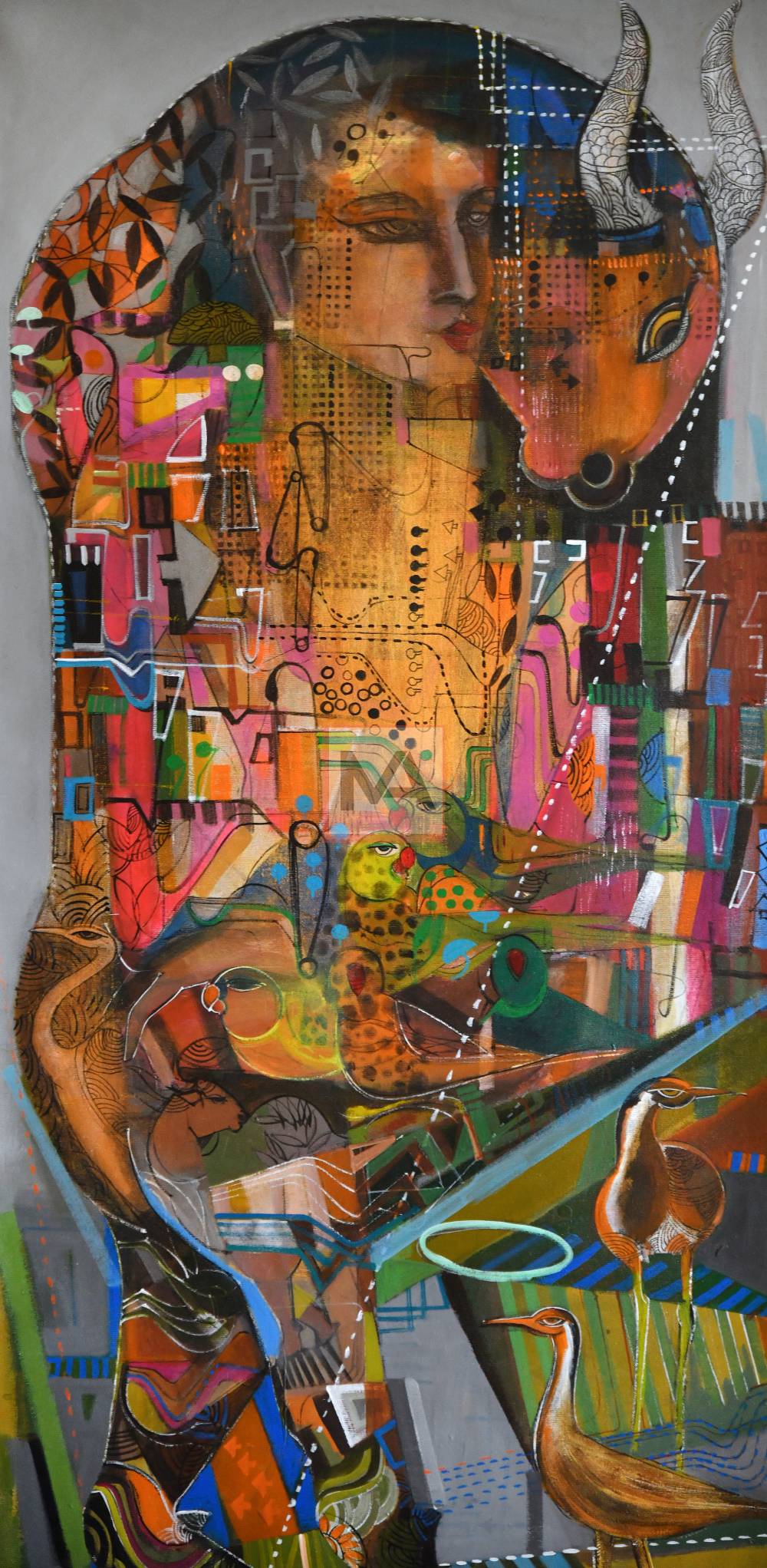
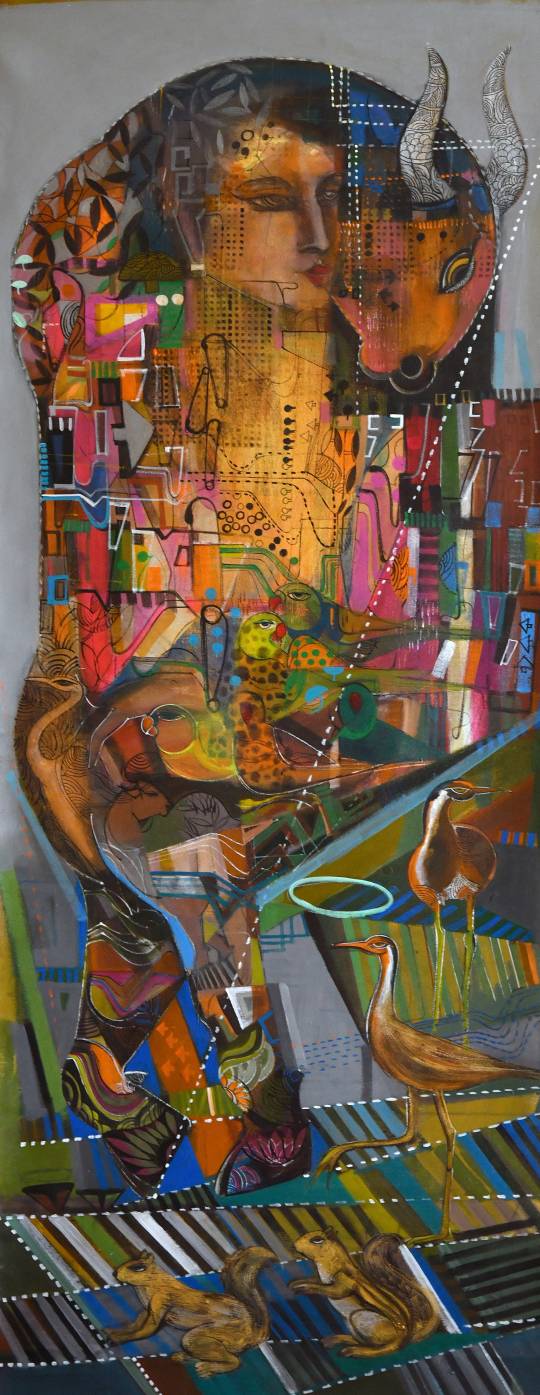
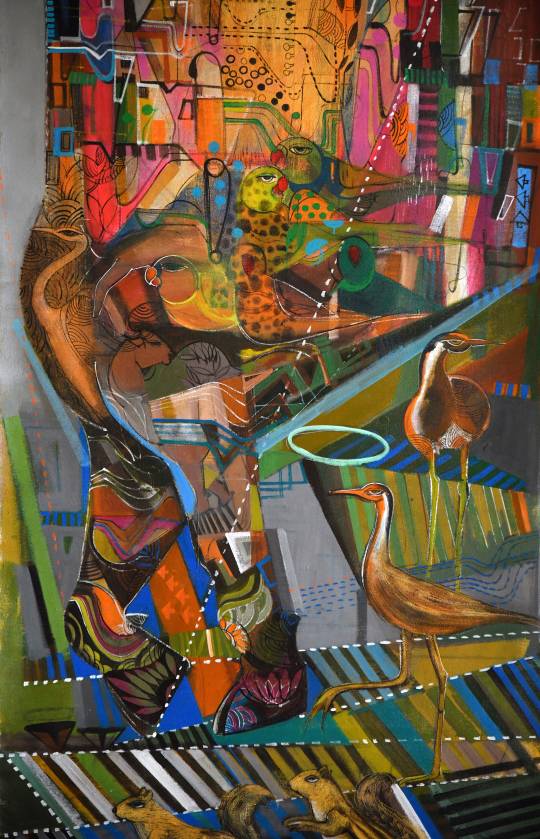
Madan Lal engages with the psychological and existential condition of contemporary humanity, presenting a world marked by fragmentation, alienation, and self-imposed boundaries. In this work, the human figure is not depicted directly; rather, its presence is inferred through the structures it creates—lines, divisions, and enclosed spaces that symbolize control, possession, and ultimately, isolation. The act of dividing space becomes a metaphor for a deeper inner disintegration, where the desire for mastery results in emotional and spiritual impoverishment.
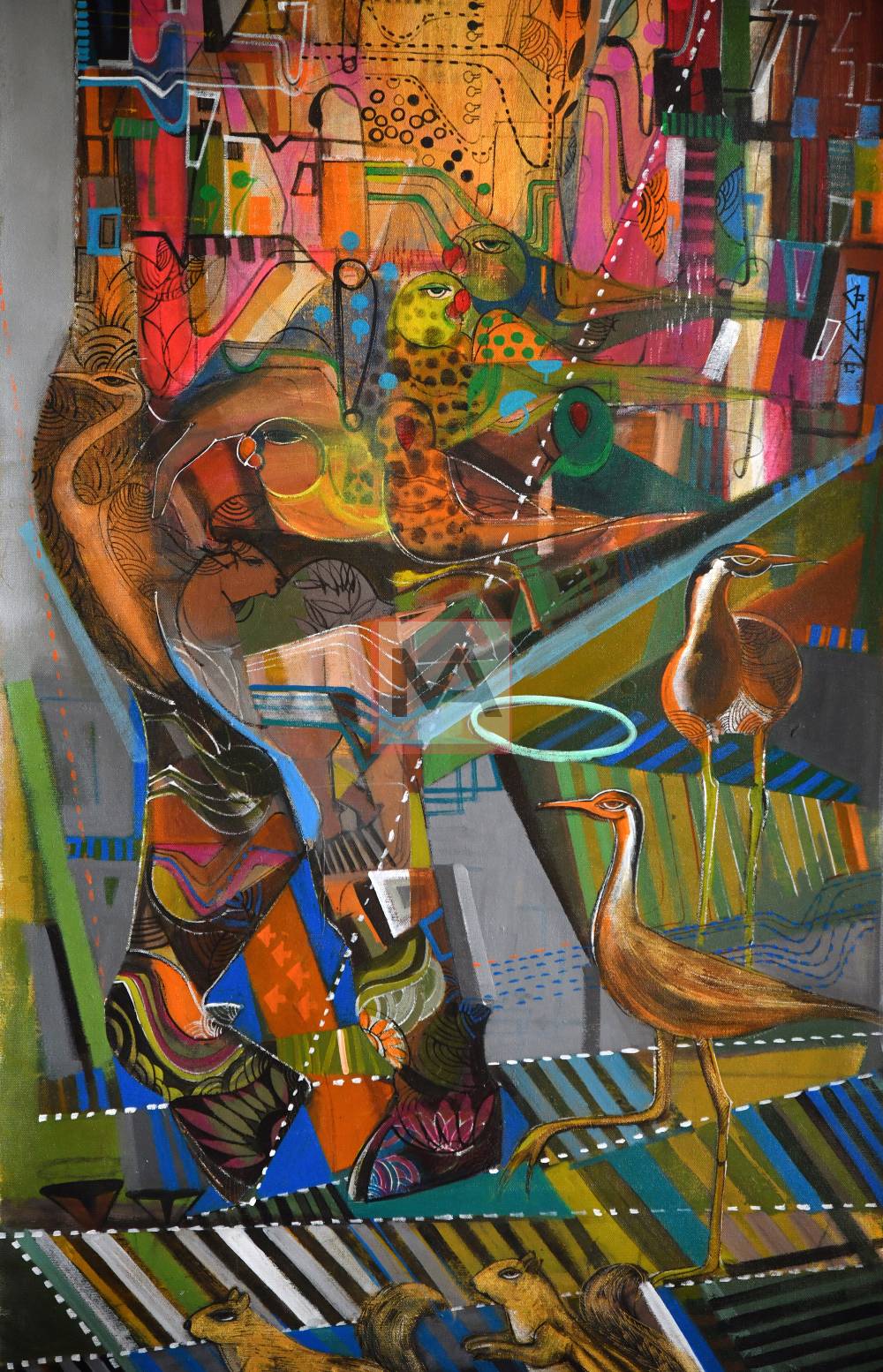
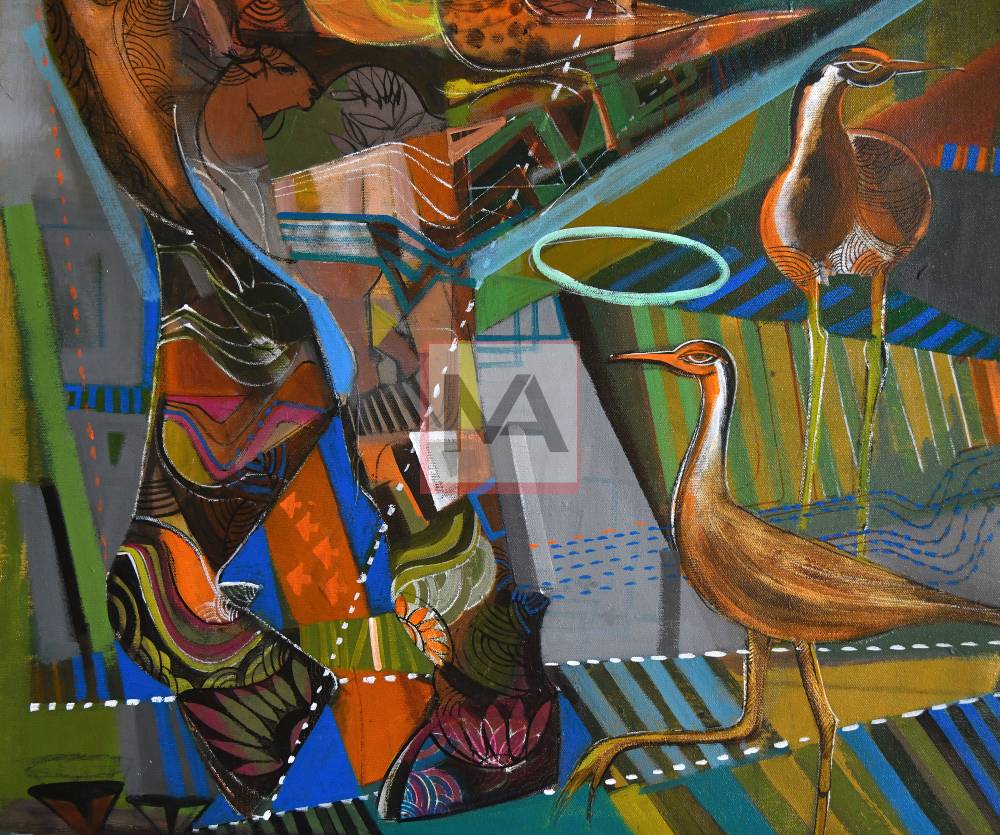
The architectural elements—stairs, corridors, and chambers—lead toward indeterminate spaces, suggesting both movement and entrapment. These constructed environments reflect a fractured psyche, where compartmentalization replaces continuity. Within this system, resolution appears illusory; the very lines meant to organize instead intensify disconnection.
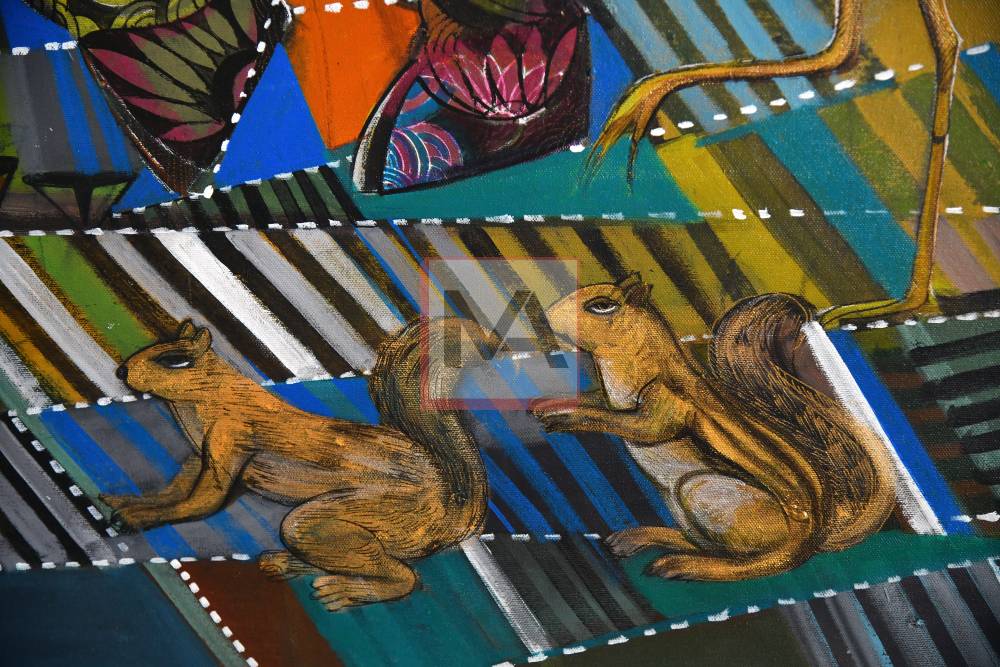
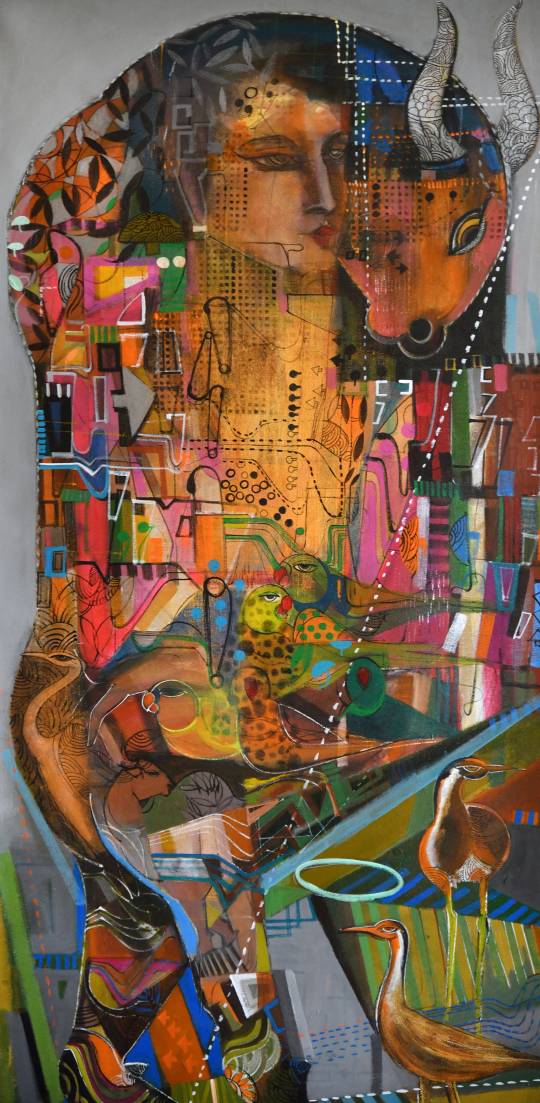
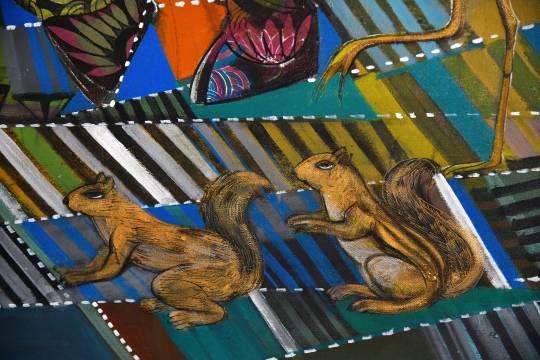
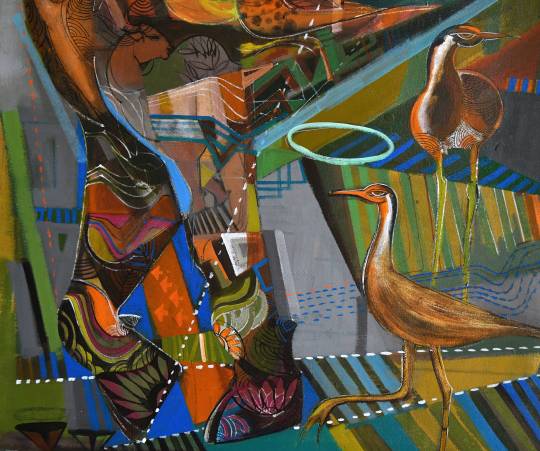
The presence of animals—squirrels, parrots, and herons—introduces a poignant counterpoint. Traditionally associated with vitality, playfulness, and freedom, these beings appear subdued, melancholic, and psychologically burdened. Their condition reflects not physical deprivation but an internalized distress, mirroring the human condition shaped by division and constraint. Nature itself, rather than flourishing, becomes an affected participant in this fractured order.
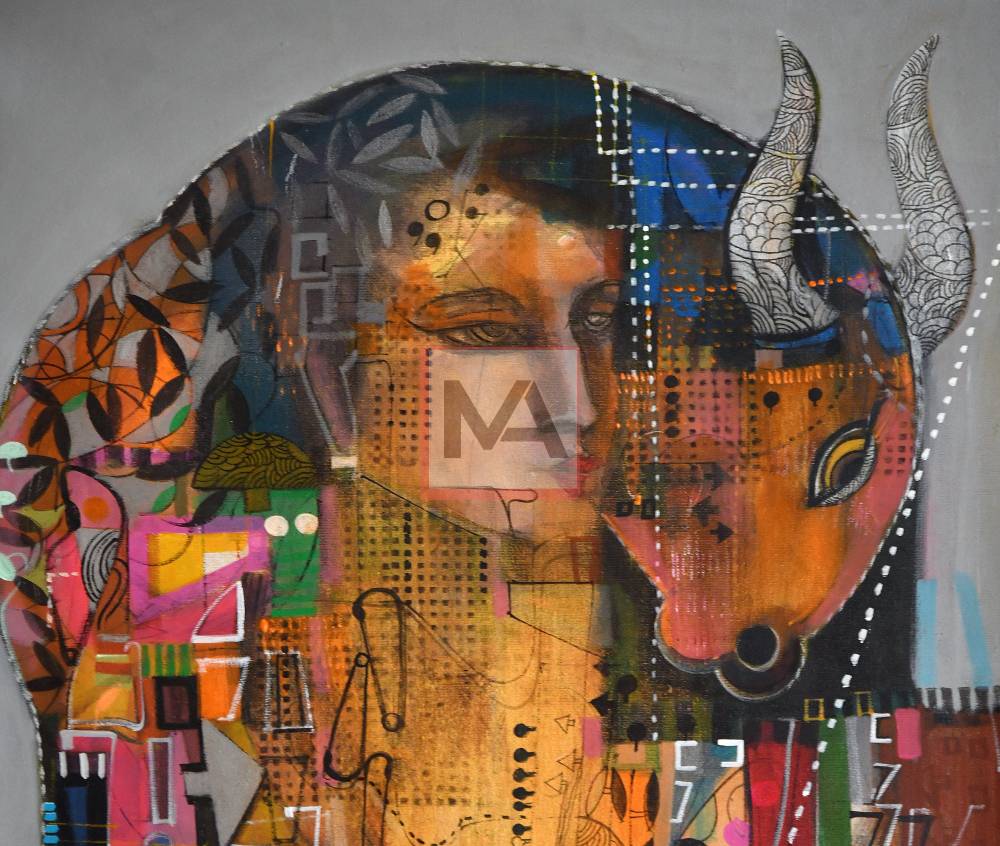
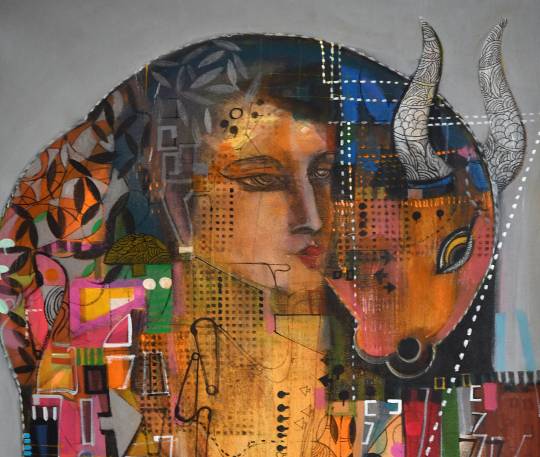
Amidst this tension, a luminous yellow figure—evocative of Vasanta, or the spirit of spring—emerges as a central, transformative presence. This form suggests renewal, vitality, and an underlying cosmic energy that persists despite fragmentation. Supported by the symbolic presence of Nandi, often associated with strength, continuity, and generative force, the composition introduces a counter-narrative of potential regeneration. Nandi’s poised stillness conveys both latent power and anticipation, as if awaiting a moment of reawakening.
The canvas operates as a dense field of metaphors—an intricate visual lexicon that resists singular interpretation. Each element contributes to a larger cosmology, where psychological, ecological, and spiritual dimensions intersect. In this sense, the work may be understood as an expansive, almost encyclopedic reflection on the human condition.
Madan Lal’s practice reveals a depth that unfolds gradually, resisting immediate comprehension. His paintings demand sustained engagement, offering layers of meaning that evolve over time. Within this complexity lies a quiet proposition: that even within fragmentation, the possibility of renewal endures.

Payment can be made using bank transfer, credit card or escrow.
MayinArt team will share with you the payment link once we ensure the availability and condition of the artwork. The payment link will include the packaging and shipping charges on actual.

MayinArt ensures a swift shipping and safe delivery of your artworks.
Every work is carefully packaged by the artist, according to standardized packaging specifications set by MayinArt. The package is then inspected by our team and entrusted to a specialized delivery carrier. Tracking details will be shared with you and the work will be delivered to the address indicated at the time of the order. The packaging and delivery costs for the work will be communicated to you by our dedicated team. Over the last three years, we have maintained a 100% success rate in safe and fast delivery of all artworks.

MayinArt has a 7 days withdrawal period, starting on the day you receive your work.
Customers can return the work if you do not see that the work conforms to your expected standards. You are entitled to a full refund or credit on the price of the artwork and you only bear the cost of the return shipment.


Debra from Singapore shares her joy with this picture