BUY NOW, With Stripe 
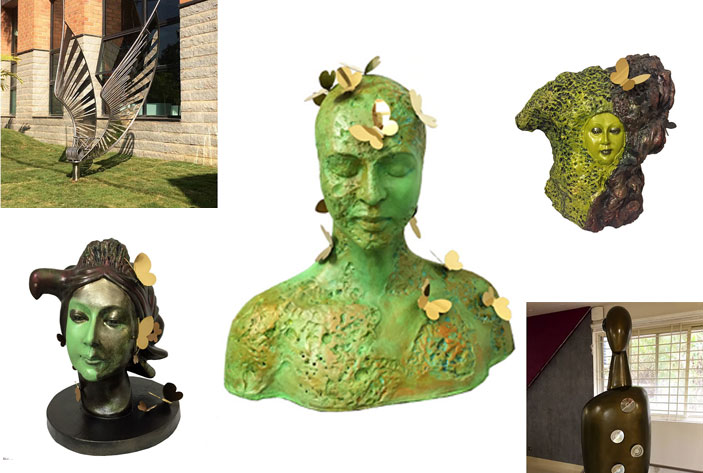
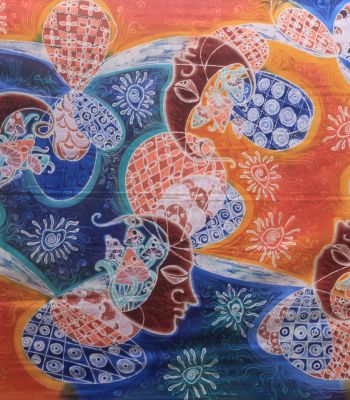
Madan Lal has established a significant presence both within India and internationally through a practice that engages with the socio-emotional fabric of contemporary life. His works frequently address themes such as migration, aspiration, ecological imbalance, and the growing disconnection between humanity and the natural world. Yet, rather than adopting a purely critical stance, his visual language often shifts toward a contemplative and poetic register.
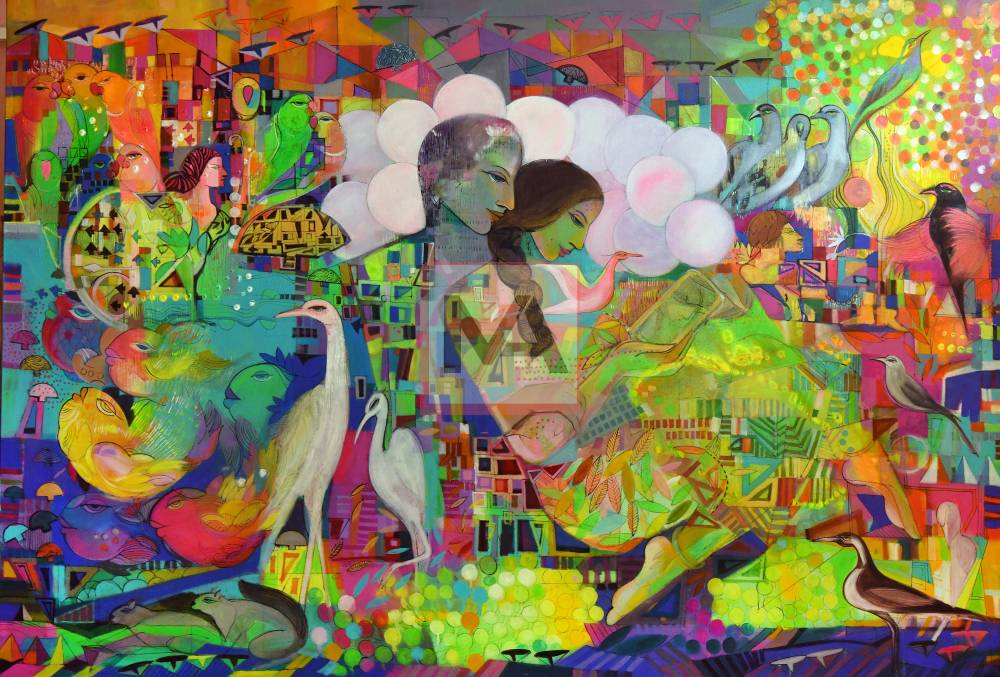
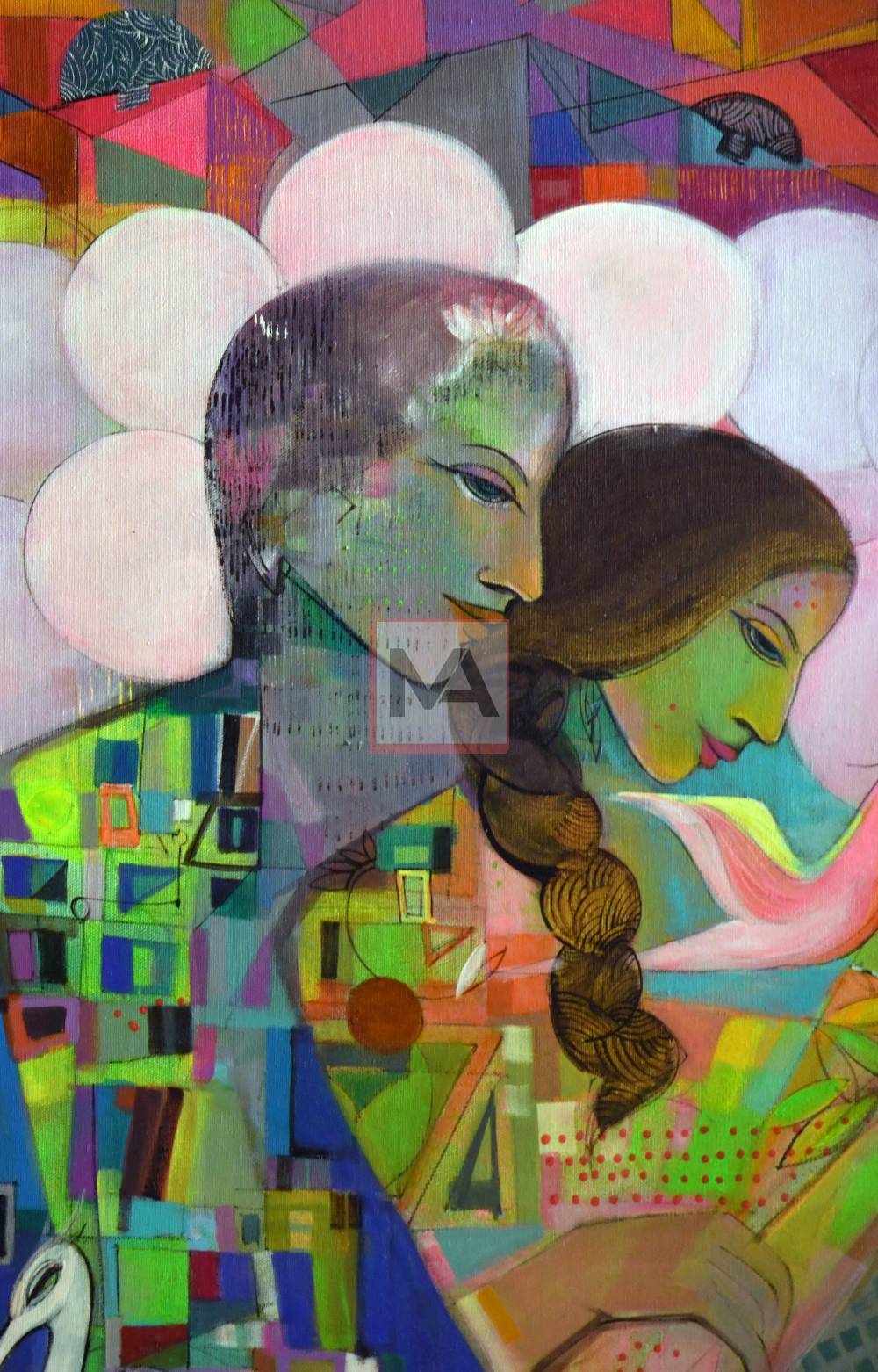
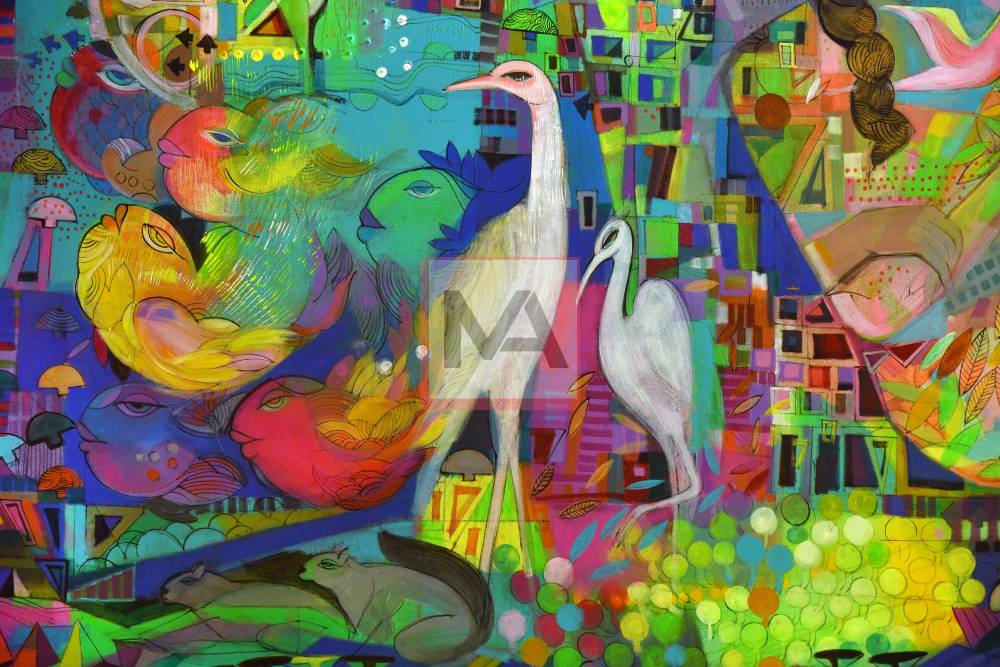
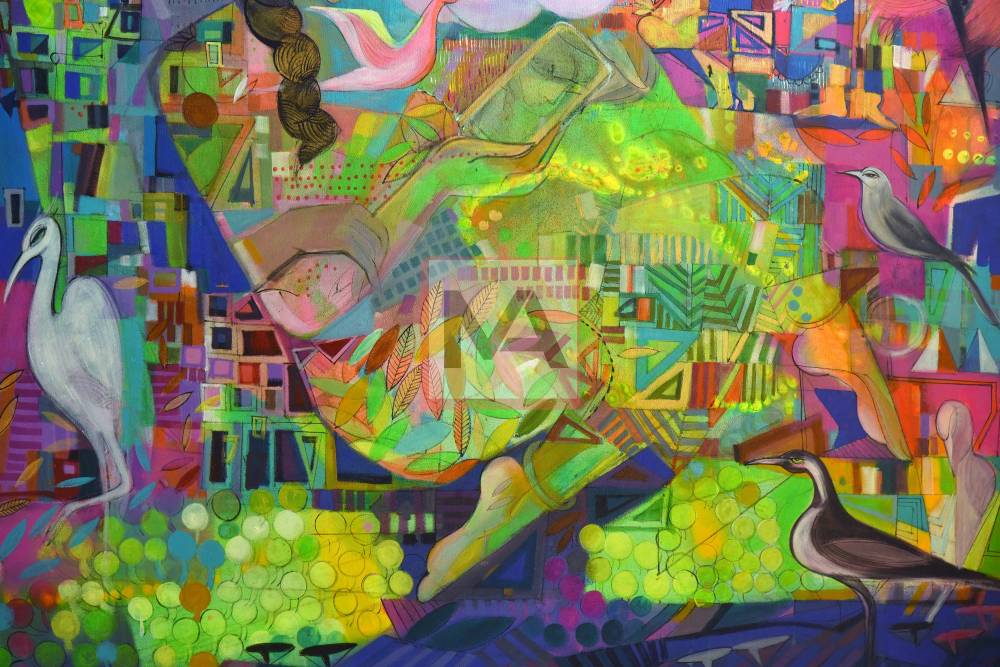
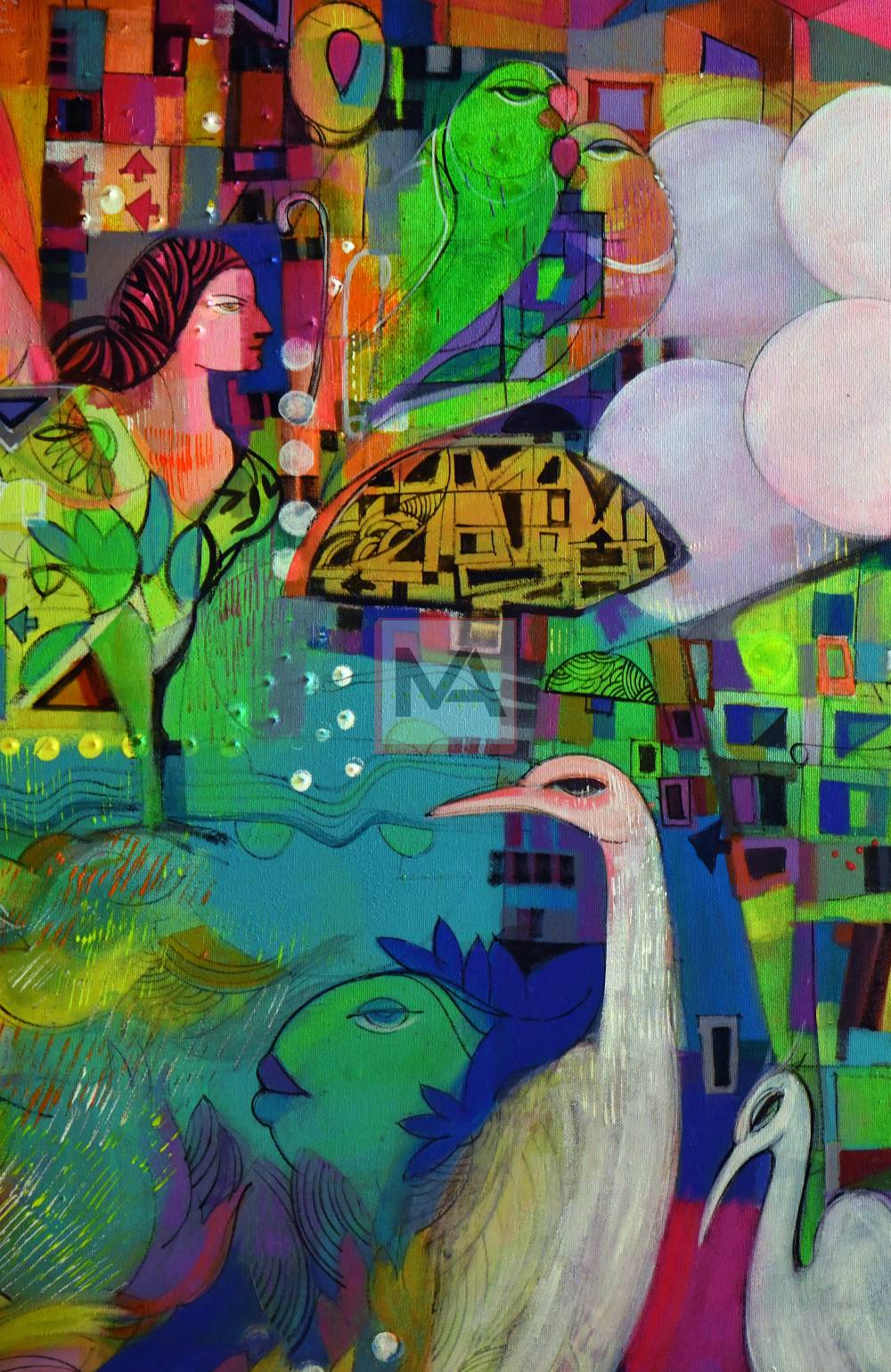
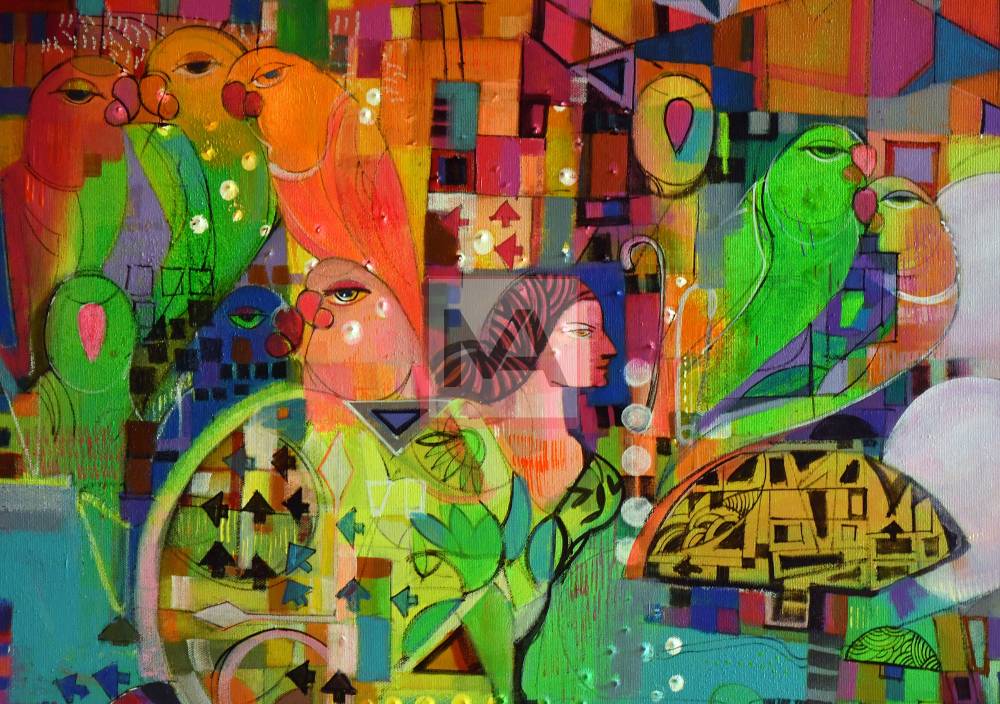
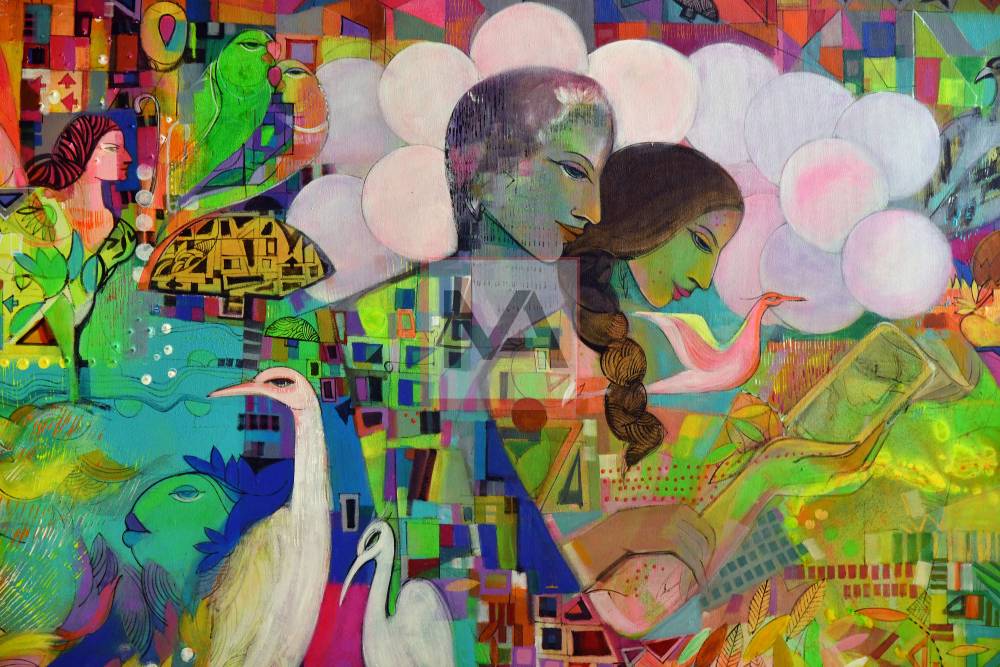
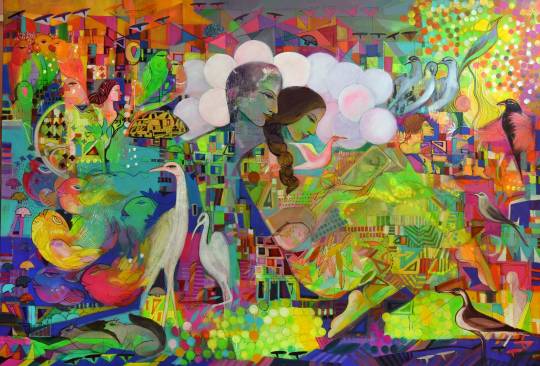
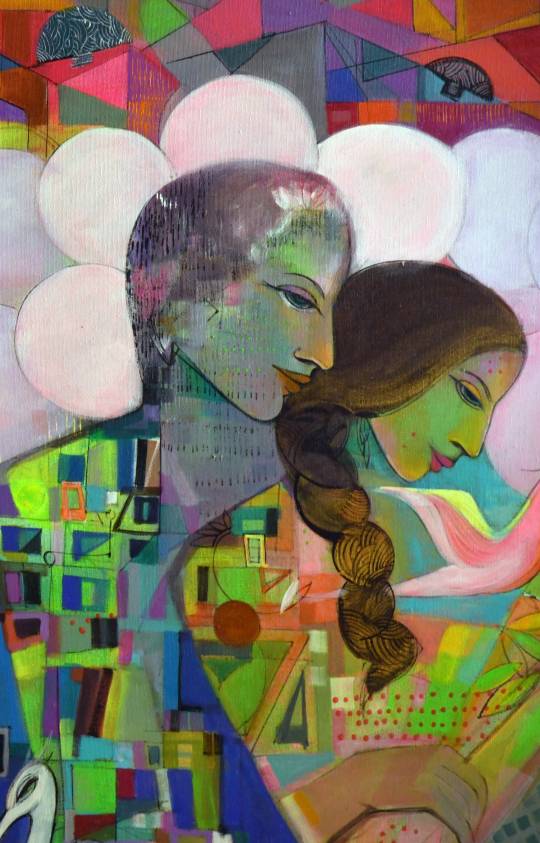
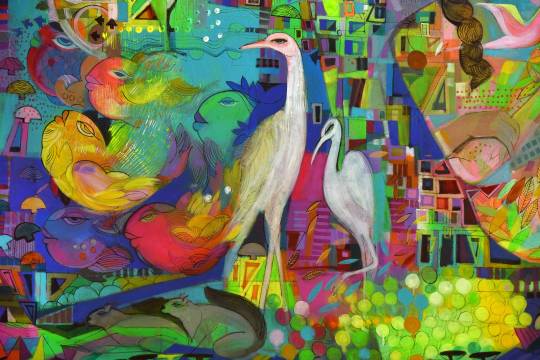
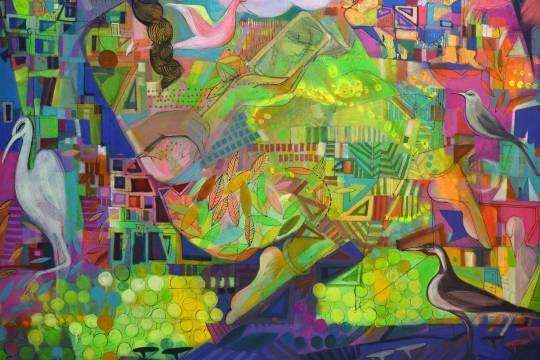
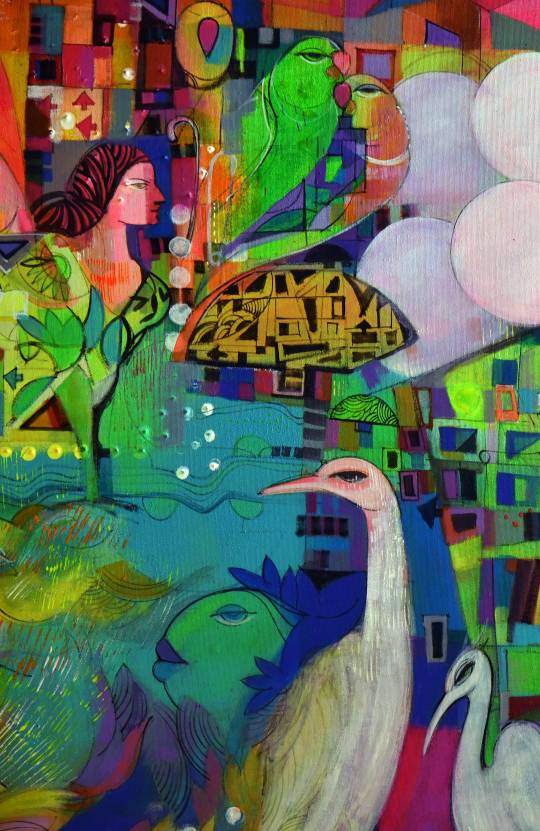
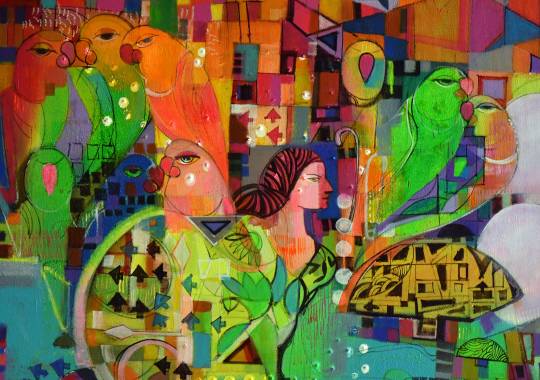
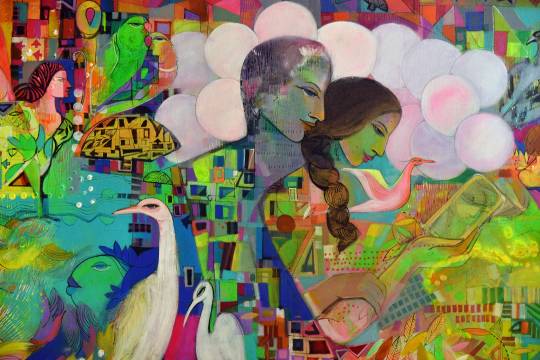
In his recent body of work inspired by Vrindavan, the artist situates himself within a symbolic landscape where human intimacy and ecological harmony intersect. The composition is anchored by the recurring motif of a damsel and her lover—figures that function less as individuals and more as archetypes of relational and emotional states. Their presence introduces a narrative of romantic introspection, rendered with a certain luminosity that emphasizes both physical beauty and inner sensibility. The predominance of green across the pictorial field further reinforces an atmosphere of equilibrium, calm, and regeneration.
The substitution of the mirror with a mobile device in the damsel’s gesture introduces a subtle commentary on contemporary modes of perception and connection, situating the work within present-day realities while retaining its allegorical depth. The male figure, positioned in quiet proximity, embodies observation and restraint, suggesting a relational dynamic grounded in trust and introspection rather than overt expression.
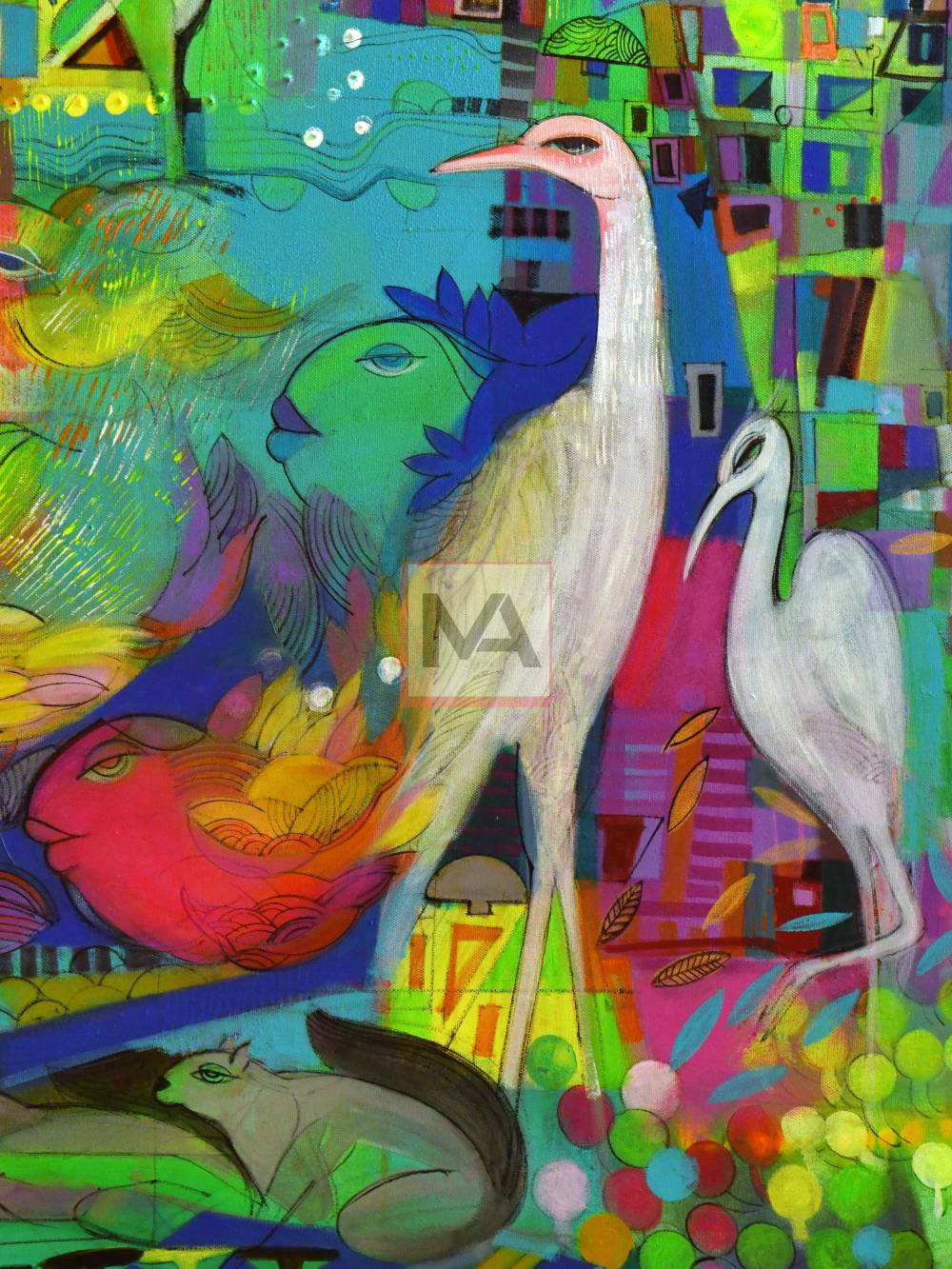
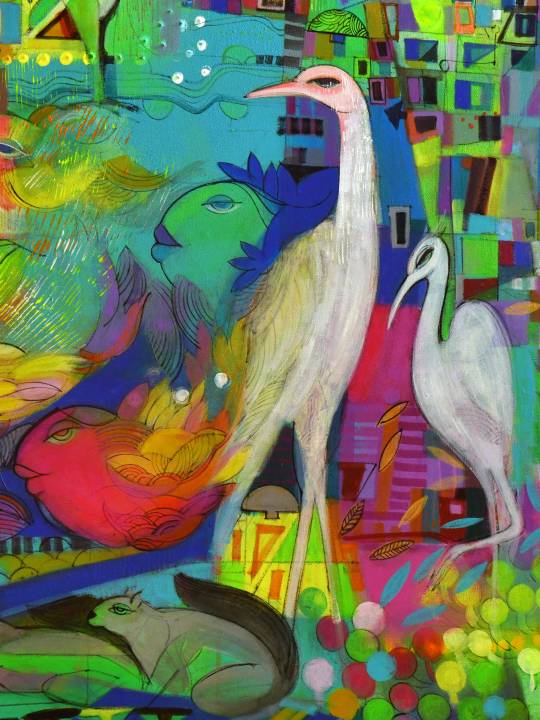
Surrounding this central pairing is an intricately articulated ecosystem, populated by birds, aquatic life, and vegetal forms. These elements are not merely decorative but function as symbolic extensions of the core themes. Avian imagery—ranging from nurturing pigeons to poised, flight-ready forms—articulates ideas of care, vigilance, and freedom. The natural environment, composed of trees, creepers, and flowing forms, operates as both shelter and sustenance, reinforcing an ethic of coexistence and mutual dependence.
The composition as a whole unfolds as a carefully balanced system in which each element occupies a defined yet interconnected position. This sense of order and harmony contrasts with the fragmented realities often depicted in the artist’s earlier thematic concerns, suggesting a movement toward synthesis and reconciliation. The visual field resonates with a quiet musicality, where multiplicity resolves into unity.
Ultimately, Madan Lal’s work proposes a reorientation of human consciousness—one that recognizes the intrinsic interconnectedness of emotional life and ecological existence. Love, in this context, extends beyond the human domain to encompass a broader, almost cosmological sense of belonging. The artist thus positions himself not only as an observer but as an सहभागी (participant) within this continuum, where art becomes a medium for articulating the fragile yet enduring balance between humanity and nature.

Payment can be made using bank transfer, credit card or escrow.
MayinArt team will share with you the payment link once we ensure the availability and condition of the artwork. The payment link will include the packaging and shipping charges on actual.

MayinArt ensures a swift shipping and safe delivery of your artworks.
Every work is carefully packaged by the artist, according to standardized packaging specifications set by MayinArt. The package is then inspected by our team and entrusted to a specialized delivery carrier. Tracking details will be shared with you and the work will be delivered to the address indicated at the time of the order. The packaging and delivery costs for the work will be communicated to you by our dedicated team. Over the last three years, we have maintained a 100% success rate in safe and fast delivery of all artworks.

MayinArt has a 7 days withdrawal period, starting on the day you receive your work.
Customers can return the work if you do not see that the work conforms to your expected standards. You are entitled to a full refund or credit on the price of the artwork and you only bear the cost of the return shipment.